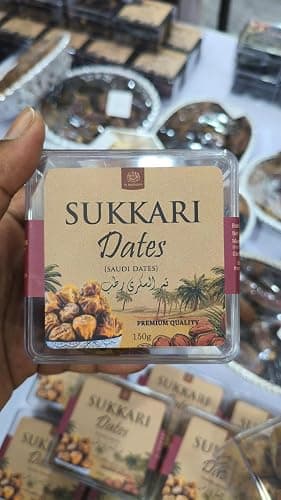
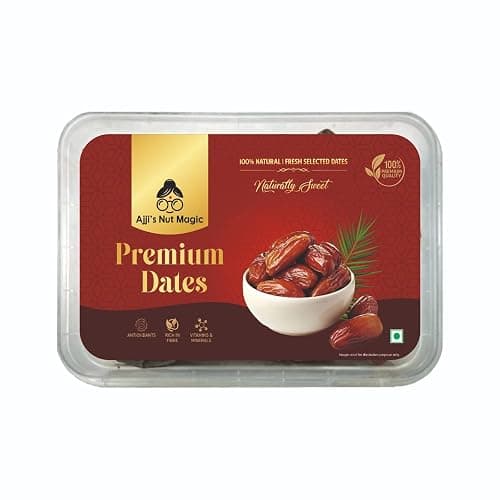
Types of Dates in India: Medjool, Ajwa, Kimia & More Compared
Walk into any Indian grocery aisle around a festival and you'll see a dozen date varieties stacked side by side, priced anywhere from ₹300 to ₹2,000 a kilo. The variety names aren't marketing — they're genuinely different dates, grown in different regions, with different textures and price points. Here's what actually separates the three varieties that dominate the Indian market, and how to compare them fairly.
The main date varieties sold in India
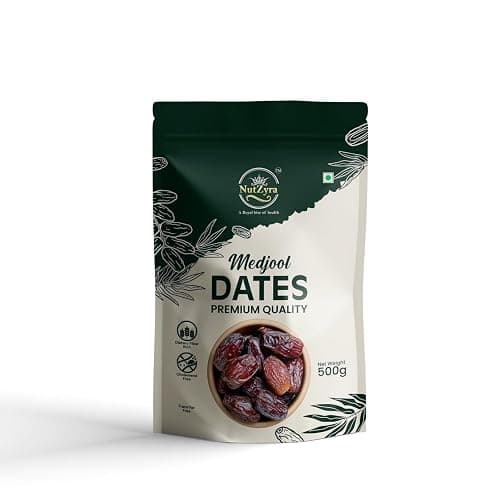
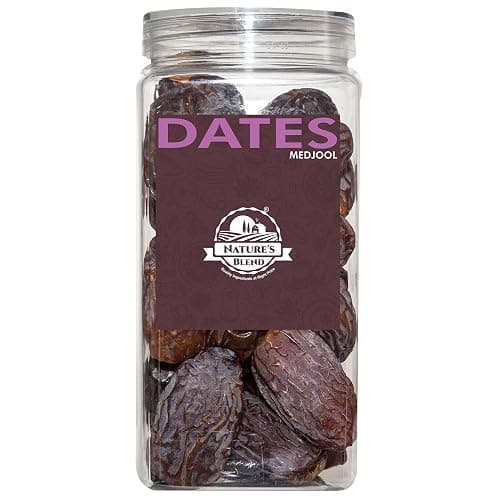
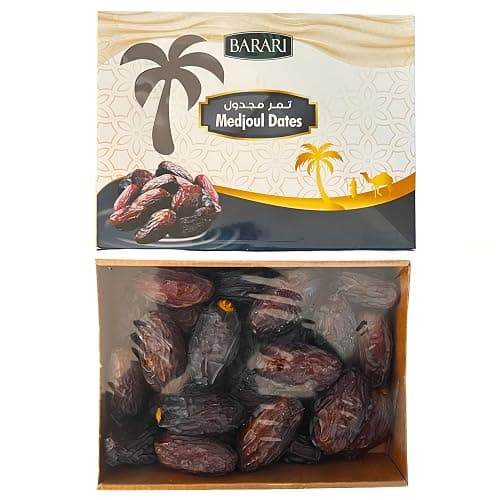
Medjool is the large, soft, caramel-textured date most people picture when they think "premium dates." It's grown mainly in the US, Jordan and Israel, has a thick, glossy skin, and is sold whole rather than pressed into blocks — which is part of why it commands a premium price.
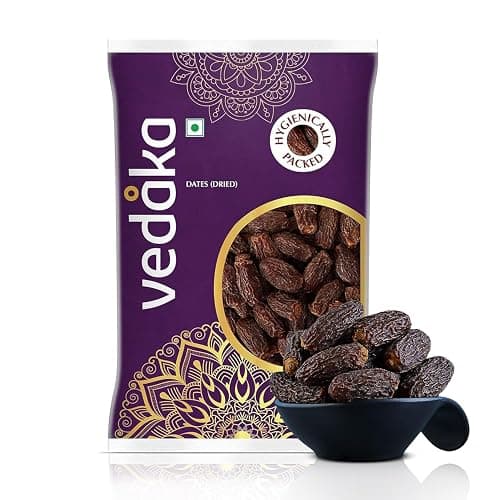
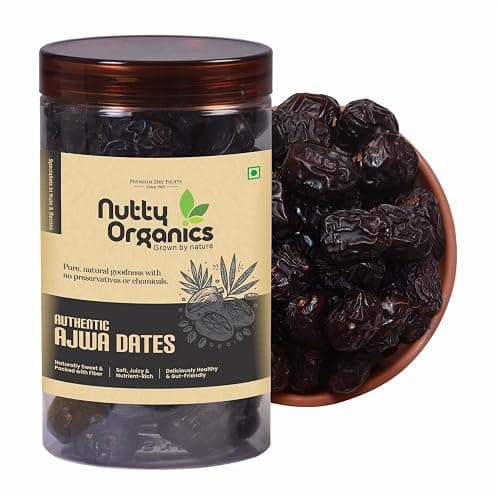
Ajwa is a smaller, drier, darker date from Madina, Saudi Arabia, with real religious and cultural significance for Muslim consumers — which is exactly why it carries a price premium and, unfortunately, why it's one of the more commonly mislabeled dates in the market (more on that below).
Kimia is an Iranian semi-dry date and the everyday value pick in most Indian households — less glossy and less sweet than Medjool, but the variety most people are actually eating on a regular Tuesday, not just at Diwali.
Why price-per-kg matters more than pack price
Dates are sold in wildly inconsistent pack sizes — 200g pouches, 400g boxes, 1kg bulk bags — so a ₹299 pack can easily cost more per kilo than a ₹549 pack. Dividing price by pack weight is the only way to compare two listings fairly, which is exactly what every price shown on this site already does for you.
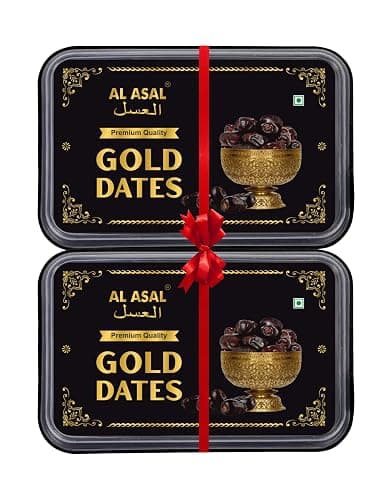
This matters more for dates than most groceries because premium varieties are frequently sold in smaller decorative packs specifically for gifting, which hides a much higher per-kg price behind a modest-looking sticker price.
Authenticity: why the label 'Ajwa' isn't always Ajwa
Because Ajwa carries both a price premium and religious significance, it's a variety worth buying carefully. Genuine Ajwa is small, dense and notably drier than Medjool, with a matte, wrinkled skin — if a date sold as "Ajwa" looks large, glossy and Medjool-soft, that's a signal to check the seller and origin claims more closely rather than assume the label is accurate.
This isn't unique to India or to dates — premium, hard-to-verify food products attract mislabeling everywhere. The practical defense is the same one that works for any specialty ingredient: buy from sellers who state a specific origin (Madina/Saudi Arabia for real Ajwa), and treat a suspiciously low price on a premium-labeled variety as a red flag, not a bargain.
Other date varieties worth knowing
Deglet Noor — a semi-dry, amber-coloured date from Algeria and Tunisia, firmer and less sweet than Medjool. It's the most widely cultivated variety worldwide and is often used in baking because it holds its shape when cooked, rather than being eaten as a standalone snack.
Safawi — a dark, dense date from Madina grown in the same region as Ajwa and sometimes confused with it, though Safawi is generally larger and glossier.
Barhi (also spelled Barhee) — usually sold at the khalal (crunchy, not-yet-fully-ripe) stage, giving it a texture closer to an apple than a typical soft date. It's less common in Indian retail but shows up seasonally.
Zahidi — a smaller, firmer, golden-brown date grown mainly in Iraq and Iran, valued as a low-cost everyday variety similar in role to Kimia.
Where dates come from, and why the region matters
The date palm (Phoenix dactylifera) has been cultivated across the Middle East and North Africa for thousands of years, and the variety names on Indian packaging are almost always tied to a specific growing region rather than being generic marketing terms — Medjool from Jordan/Israel/the US, Ajwa and Safawi from Madina in Saudi Arabia, Kimia and Zahidi from Iran and Iraq, Deglet Noor from Algeria and Tunisia.
India imports the overwhelming majority of the dates sold here rather than growing them domestically at scale, which is part of why import origin, not just variety name, affects price — a listing that names its country of origin is generally more trustworthy than one that doesn't.
Nutrition basics across varieties
All dried date varieties are calorie-dense and high in natural sugars (mainly glucose and fructose) and dietary fibre, with meaningful amounts of potassium and small amounts of iron and magnesium. The broad nutritional profile is similar across Medjool, Ajwa and Kimia — the differences shoppers actually notice are in moisture content, sweetness and texture, not macronutrients.
Softer varieties like Medjool have higher moisture content, which is part of why they're more perishable and benefit from refrigeration, while drier varieties like Ajwa and Kimia keep longer at room temperature by design, not just tradition.
How to choose
Buying for gifting or a festival hamper: Medjool or genuine Ajwa, and expect to pay a real premium for both — that's the trade-off for size, softness and provenance.
Buying for everyday eating or cooking: Kimia, Zahidi or a similarly-priced value variety gets you most of the nutritional and culinary use case at a fraction of the price-per-kg. Deglet Noor is the better pick specifically for baking, since it holds its shape when heated.
Either way: compare price-per-kg (not the pack price), check for a pit/seedless label if that matters to you, and look for an FSSAI mark, a stated country of origin, and a legible best-before date before buying.